- 4월 25일부터 복합문화예술공간MERGE?에서 개최
- 한국문화예술위원회 '다원예술 창작주체' 지원 선정 프로젝트
- 회화와 조각을 통해 감정과 신체의 유기적 관계 탐구
사라 클라트(Sara Klatt): 각인된 감정 억압된 신체
보이는 형상 너머의 진실을 마주하다
사라 클라트(Sara Klatt)의 작업 세계는 인간의 ‘신체’를 기점으로 삼지만, 결코 외형적인 재현이나 물리적 묘사에 안주하지 않는다. 작가에게 신체란 개인의 고유한 성격과 예민한 감각이 집약된 통로이자, 언어로 치환하기 어려운 복잡미묘한 정서들이 시각적 언어로 번역되는 성찰의 장(場)이다. 이번 전시는 회화, 조각, 그리고 타투 연작이라는 세 가지 궤적을 통해 신체가 지닌 유기적 생명력과 그 이면에 숨겨진 사회적 억압의 층위를 입체적으로 조명한다.

유기적 파동에서 사회적 결박으로
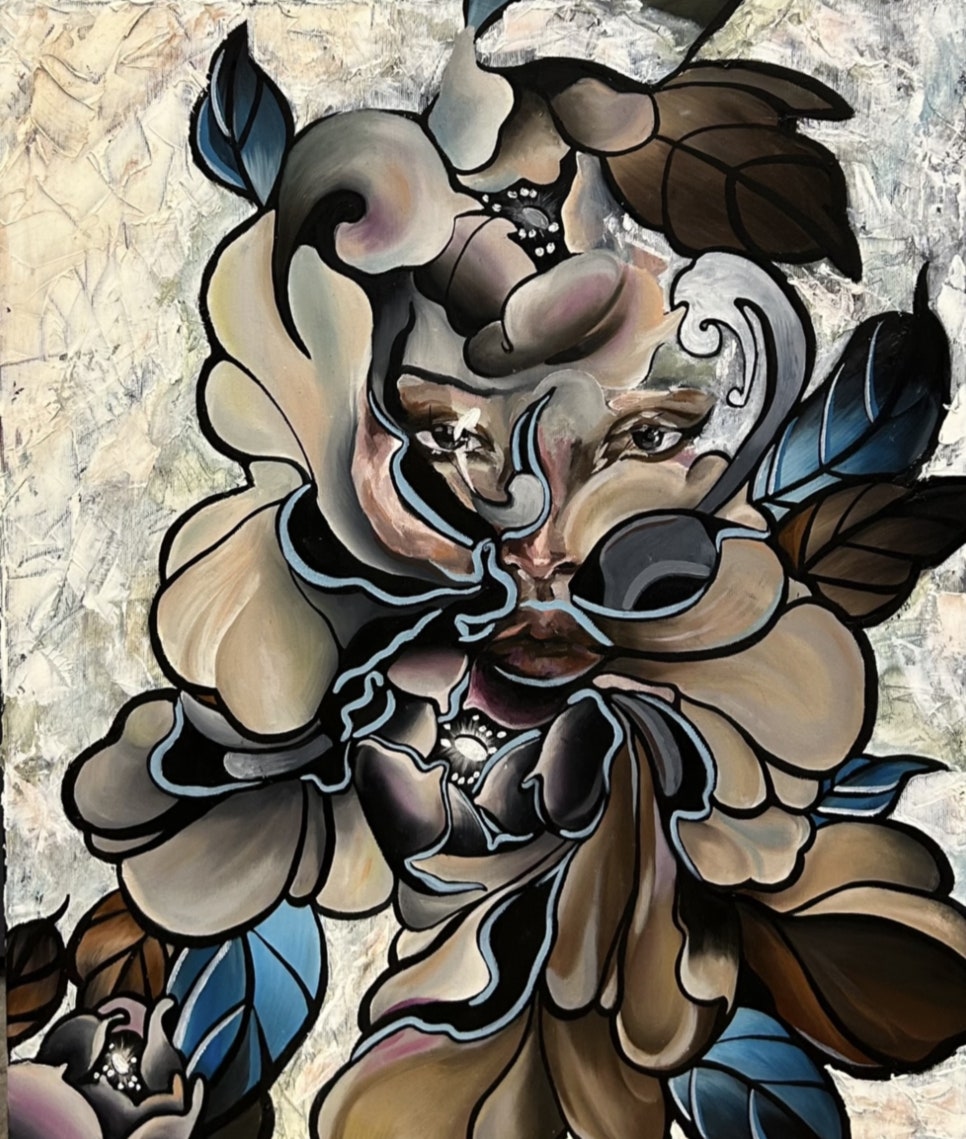
전시의 한 축을 담당하는 회화 작업은 꽃과 같은 유기적 형태를 띠며 부드러운 선과 색채로 공명을 일으킨다. 이는 타인과의 관계에서 비롯된 미세한 감정의 파동을 시각화한 것으로, 작가의 내면을 거쳐 정제된 정서적 평온을 선사한다. 그러나 이러한 서정적 울림은 전시장 중앙을 압도하는 검은 조형물들에 의해 반전된다.
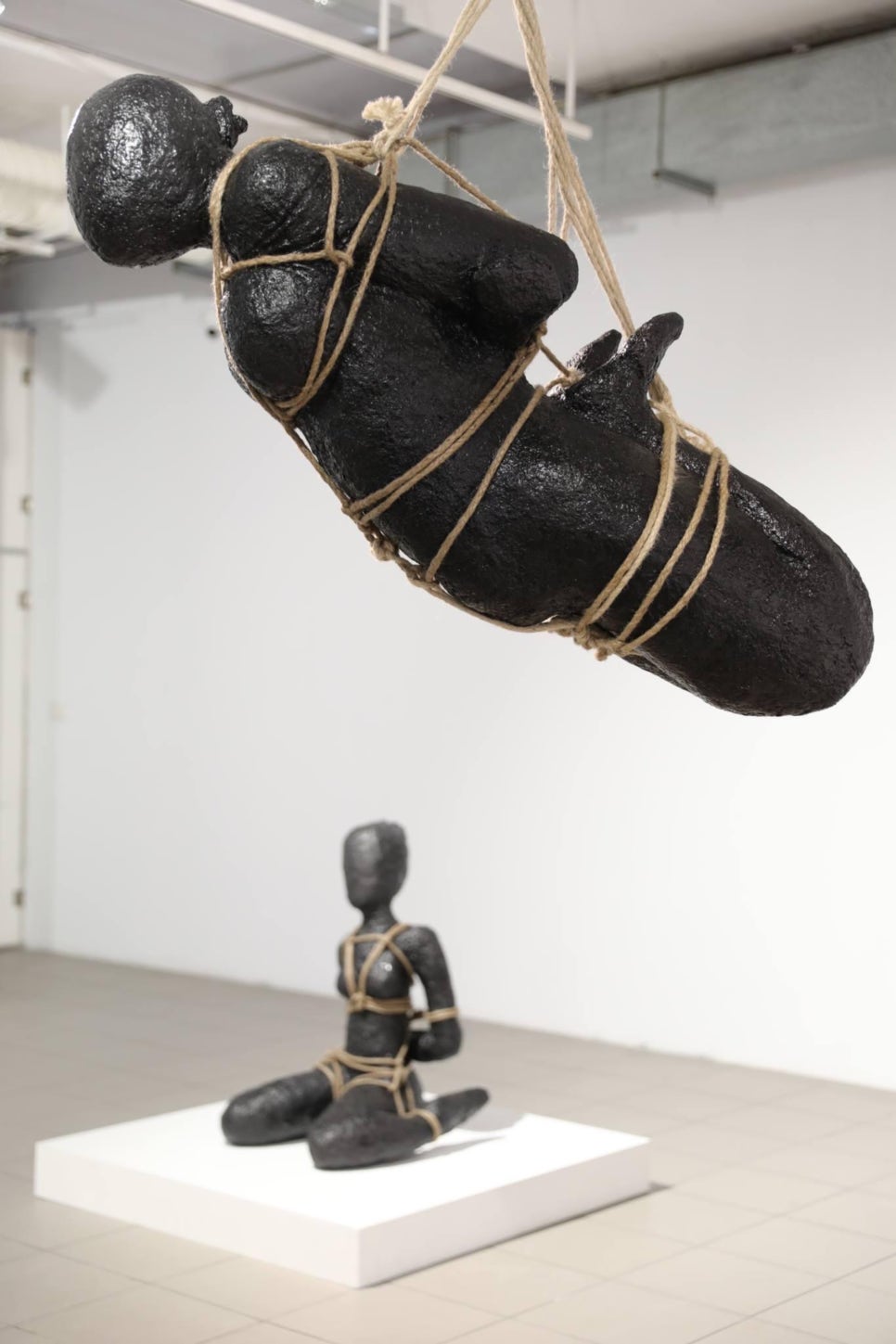
밧줄에 결박되어 공중에 매달리거나 위태롭게 버티고 있는 익명의 신체들은 제도와 관습이라는 보이지 않는 구조에 포획된 현대인의 비참을 상징한다. 여기서 신체는 더 이상 감정의 자유로운 통로가 아닌, 집단 속에서 부품화된 고독한 실존의 자화상이 된다. 작가는 인체의 개성을 거세하고 어둠의 색채로 마감함으로써, 개별적 자아를 넘어 보편적 인류가 마주한 실존적 불안과 억압의 미학을 증언한다.

피부, 지워지지 않는 서사의 기록
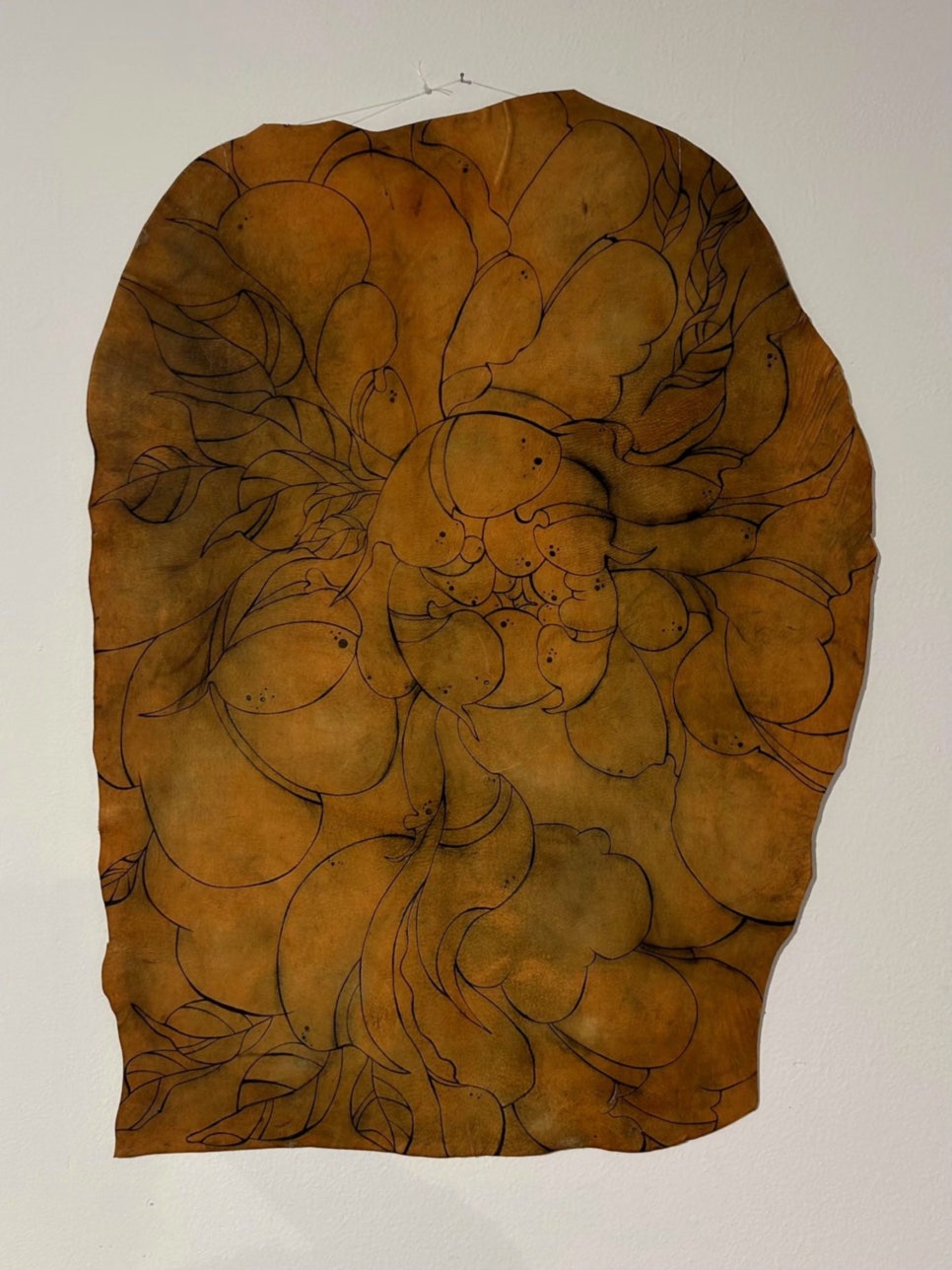
이번 전시에서 가장 파격적인 지점은 돼지 가죽 위에 타투 기법을 적용한 연작이다. 생물학적으로 인간과 흡사한 돼지 가죽은 상처 입기 쉬운 피부의 연약함과 한 번 새기면 지워지지 않는 영속성을 동시에 상징하는 ‘대리적 피부’가 된다. 작가는 죽은 물질 위에 바늘로 잉크를 새겨 넣는 행위를 통해, 휘발되기 쉬운 감정의 무늬를 가시화된 기록으로 정착시킨다.
화면 사이에 점철된 검은 점들과 중첩된 꽃잎의 형상은 외부 자극이 내면에 남기는 지워지지 않는 흔적들을 은유한다. 이는 회화에서 보여준 유기적 관계의 연장선이자, 조각이 보여주는 물리적 구속이 내면화된 고통의 흔적이기도 하다.

고통과 해방이 교차하는 서늘한 감각
결국 사라 클라트의 작업은 부드러운 꽃(생명력)과 거친 밧줄(억압), 차가운 가죽(죽음)이라는 이질적인 요소들을 ‘신체’라는 매개체로 통합한다. 관객은 팽팽하게 당겨진 밧줄의 긴장감과 가죽 위에 새겨진 정교한 각인을 통해 자신의 내면에 잠재된 심리적 구속을 마주하게 될 것이다.
이번 전시는 우리를 지탱하는 위태로운 질서와 그 이면에 각인된 감정의 실체를 응시하는 기회가 될 것이다. 고통과 해방이 교차하는 그 서늘한 지점에서, 우리는 비로소 형상 너머에 숨겨진 인간 실존의 진실된 얼굴과 마주하게 된다.
Sara Klatt's Imprinted Emotions and Anonymous Existence
Sung Baeg / Director of openARTs space MERGE?
Facing the Truth Beyond the Visible Form
The artistic world of Sara Klatt takes the human 'body' as its point of origin, but it never settles for mere outward representation or physical depiction. For the artist, the body is a conduit where an individual’s unique character and sensitive perceptions converge—a field of reflection where complex, subtle emotions, difficult to substitute with words, are translated into a visual language. This exhibition provides a multi-dimensional perspective on the organic vitality of the body and the social repressions hidden beneath its surface through three distinct trajectories: painting, sculpture, and the tattoo series.
From Organic Vibrations to Social Binding
The paintings, which form a central pillar of the exhibition, take on organic shapes reminiscent of flowers, evoking a visual resonance through soft lines and colors. These works visualize the minute emotional shifts stemming from relationships with others, offering a sense of refined emotional tranquility processed through the artist’s inner world. However, this lyrical resonance is starkly subverted by the black sculptures dominating the center of the gallery.
Anonymous bodies, bound by ropes, suspended in mid-air, or precariously holding their ground, symbolize the wretchedness of modern individuals trapped within invisible structures of systems and customs. Here, the body is no longer a free passage for emotion, but a self-portrait of lonely existence, transformed into a mere component within a collective. By stripping away individual personality and finishing the pieces in dark hues, the artist visualizes the existential anxiety and oppression faced by humanity as a whole, reaching beyond the individual self.
Records of Indelible Narratives
The most provocative element of this exhibition is the series applying tattoo techniques onto pigskin. Pigskin, which is biologically similar to human skin, serves as a ‘representative skin’ that simultaneously symbolizes the fragility of skin prone to injury and the permanence of marks that, once made, can never be erased. Through the act of engraving ink with a needle onto the hide of a once-living animal, the artist fixes fleeting patterns of emotion into a visible record.
The choice of leather represents the remains of a 'carcass' from which life has departed—a cold cross-section of 'death.' Yet, by engraving exquisite and detailed marks upon this cold surface, the artist imbues death with new and diverse meanings. The patterns left on the leather are traces of pain, yet they also serve as certificates of existence for those who have endured that pain and survived.
The cool touch of the leather and the artificial marks etched upon it remind us that the wounds humans experience do not simply vanish; they are 'imprinted' as part of the body and spirit, remaining forever. This suggests that life (the flower) and death (the leather) are not separate entities but are part of a single cycle.
A Chilling Sense Where Pain and Liberation Intersect
Sara Klatt’s work integrates disparate materials—soft flowers (vitality), coarse ropes (oppression), and cold leather (death)—into a single narrative through the medium of the 'body.' By weaving these conflicting elements together, the artist visualizes the contradictions of human existence and the landscape of its inner depths.
As viewers face the physical tension of the taut ropes and the intricate engravings on the leather surfaces, they are forced to confront the internal psychological restraints suppressed by external gazes or social frameworks. Here, the body does not remain a mere physical form. It is the site where pain is recorded, and simultaneously, the gateway to liberation through that pain. The distorted figures bound by rope paradoxically radiate an intense energy of life seeking to escape those bonds, urging us to realize our own ontological position.
This exhibition will serve as an opportunity to contemplate the precarious order that sustains us and the reality of the emotions deeply imprinted beneath it. At the intersection where the fragility of a petal meets the chill of leather, the artist poses a fundamental question.
"What is the entity that oppresses us, and what is the essence of life that we ultimately strive to bloom even within that restraint?"
On the diagonal line of that boundary where pain and liberation, life and death, precariously meet, we finally come face-to-face with the truth of human existence hidden beyond the form.
)
)


)

)